Conventional supervisory relationships follow a teaching model, where the clinically advanced supervisor shoulders the responsibility of advising, critiquing, offering feedback, and imparting theoretical and clinical knowledge. The typical supervisory process tends to lean towards a cognitive, case formulation assessment of the presented case. Though contemporary psychoanalytic models of supervision challenge this approach and credit Ferenczi’s early discoveries of the transformational power of the co-constructed nature of analytic relationship and supervision, the supervisor as authority and dispenser of truth has been reluctant to change.
This seminar is centered on Dr. Barsness’ new book: Psychodynamic Supervision: In a New Key (Routledge, 2008) offering a new model of supervision, rooted in the co-constructed nature of the supervisory relationship. It recognizes that the therapist holds the primary, firsthand understanding of their patient, while the supervisor offers an experienced perspective by engaging deeply with the patient’s narrative as presented by the supervisee. At the intersection of these two minds, a broader perspective emerges, illuminating potential defenses, enactments, lapses in affective responses, the effective use of the therapist’s self-experience, and any breakdowns in communication within the treatment. This model emphasizes affect over cognition, privileging the therapist’s subjectivity as the primary access point to the patient’s internal and interpersonal world. The supervisor’s own subjectivity also becomes immersed in the process, with the patient seen as a source of inspiration for expanding the supervisee’s understanding rather than as an object for evaluation. This immersion also calls forth a new language. The workshop will focus on the shift from traditional interpretation as a primary means of communication into complex dialogue.
In this approach, cognitive case formulations are replaced by the capacity to metabolize affective and intuitive responses, drawing on the evolving “data” within the intersubjective space between patient and therapist. Participants learn to process their affective experiences by connecting their feelings to their thoughts about the patient’s history and by examining how the patient’s life story repeats itself both in their life and in the therapeutic relationship.
Suggested Reading:
“Psychodynamic Supervision Theory and Practices: In a New Key”
By Roy Barsness, PhD
Chapters 1 and 5
Available for purchase on December 9, 2024
Bio:
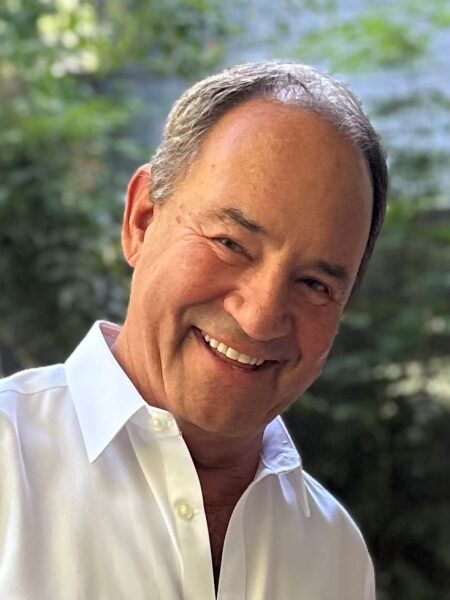
is a Clinical Psychologist, Professor and the Founder of Relationally-Focused Psychodynamic Therapy (RFPT). Dr. Barsness is the author of Core Competencies in Relational Psychoanalysis: A Guide to Practice Study and Research (Routledge, 2018; Italian trans. 2020). He is currently a Professor at The Seattle School of Theology & Psychology, was formerly the Clinical Director of the Psychology Doctoral Program at Seattle Pacific University and a Clinical Associate Professor at the University of Washington- School of Medicine. As an educator, Dr. Barsness conducts live Saturday Dialogue seminars on relational psychoanalytic/psychodynamic thought and public lectures and seminars.
NB: The Center for Christianity and Psychoanalysis does not exist to promote a single viewpoint or advance one ideological stance. Our intent is to create a space where people from varied theological traditions, clinical orientations, and cultural backgrounds can come together to think, reflect, and learn from one another.
We invite a range of speakers whose scholarship, clinical practice, and theological reflection enrich our community. Their presence with us is not an endorsement of every viewpoint they hold. Rather, our aim is to host thoughtful dialogue across differences—trusting that engagement with differing perspectives deepens our search for understanding and truth.
We are committed to fostering dialogue, not dogma, and to exposing our community to multiple perspectives across both psychoanalytic and Christian theological thought as we continue the ongoing work of integration.